Archive for photo

Todos Santos 2010- Big Wave Surf Contest

My brother Phil and I made a last-minute trip south to shoot the Todos Santos Big Wave Event off the coast of Ensenada, México, on Sunday, Feb. 28, 2010. After shooting Mavericks a few weeks earlier, he let me know they called the Todos Santos contest. With little time to prepare, we rented extra photo gear from George’s, charged batteries, and spent the night in Tijuana. We only got a couple of hours sleep before waking up around 4 a.m. to head to Ensenada.

We were to meet at 5:30 a.m. at the boat but arrived in Ensenada 20 minutes behind schedule. We knew to meet at the marina, but didn’t know exactly where. As the confusion began to peak, I resorted to breaking a few traffic laws, including one right in front of a police cruiser. At this moment, I assumed the day would be a total bust. Thankfully, the officer didn’t notice and we made it to the dock. It was a huge relief to find the group and get our bearings on the boat.

Sunrise

Ensenada Marina

Open Water

It took about an hour and a half to get to Isla Todos Santos, about 12 miles off the coast of Ensenada. The swells were big enough to have everyone excited. The first sign we were arriving was a broken surfboard floating by the boat.

Broken Surfboard

Todos Santos Island Lighthouse

Waiting

The competition had already begun when we arrived. The water was busy with jet skis and boats, blocking quite a few shots. Some photographers on skis were using weather-sealed digital SLRs, but without water housings. Our captain was pretty conservative and kept us out of optimal shooting position for most of the day. But considering it started around 8 a.m. and ended around 2:30 p.m., there was plenty of time to get a few clear shots throughout the day.

Heat 1 Qualifiers: Greg Long, Carlos Burle, Kohl Christensen

Todos Santos - Greg Long

Todos Santos - Greg Long

Todos Santos - Will Dillon Wipeout

Todos Santos - Carlos Burle

Todos Santos - Kealii Mamala Fall

Heat 2 Qualifiers: Gabriel Villarán, Grant “Twiggy” Baker, Mark Healey

This next shot is Phil’s, but I have to include it because it does a better job than mine do of giving the scale of these waves (check out his Todos Santos gallery). Gabriel Villarán rode this monster, considered the biggest wave of the day:

Todos Santos Big Wave Contest 2010

Todos Santos - Gabriel Villarán, Dave Wassel

Todos Santos - Mark Healey

Heat 3 Qualifiers: Mike Parson, Jaimie Sterling, Ken Collins

Todos Santos - Frothy Curl

Heat 4 Qualifiers: Grant Washburn, Shane Dorian, Ramon Navarro

Todos Santos - Shane Dorian

Heat 5, Semi-Final 1 Qualifiers: Grant “Twiggy” Baker, Carlos Burle, Mark Healey

Todos Santos - Watching

Heat 6, Semi-Final2 Qualifiers: Shane Dorian, Ramon Navarro, Grant Washburn

Todos Santos - Shane Dorian

Heat 7, Final: Mark Healey (1st), Shane Dorian (2nd), Ramon Navarro (3rd), Carlos Burle (4th), Grant “Twiggy” Baker (5th), Grant Washburn (6th)

Todos Santos - Shane Dorian

Todos Santos - Carlos Burle

Todos Santos - Mark Healey

Todos Santos - Last Chance

The waves were amazing all day. The sets were largest at the beginning of the day and seemed to ramp down slowly through the competition. I’d never seen waves this size in person; it’s an amazing thing to witness. The power and force of the water, the color, the sound. It’s breathtaking to see someone take on a giant.

Todos Santos - Seascape

Todos Santos - Translucent Beauty

icon for podpress  Podcast Video [01:26m]: Download

Hiking Tijuana’s Cerro Colorado

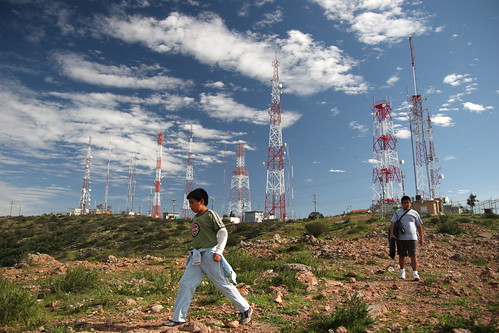
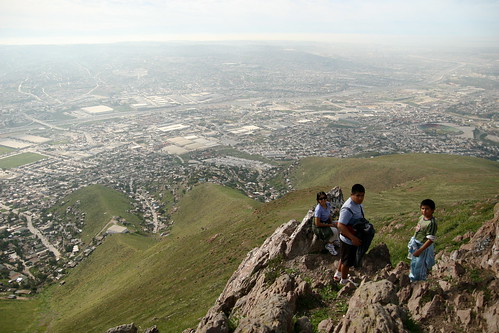
Looking East Over Tijuana

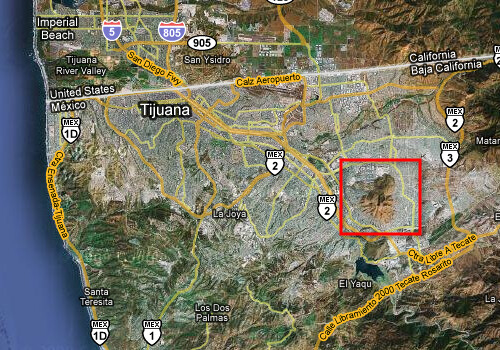
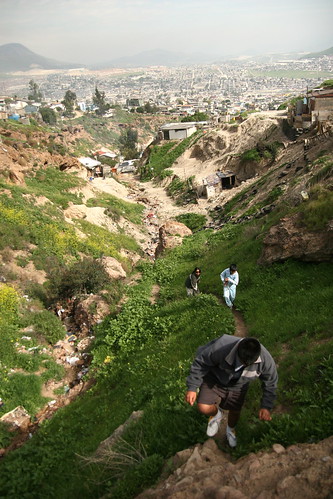
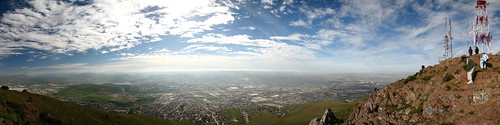
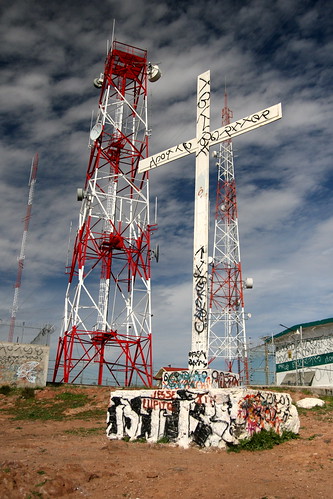
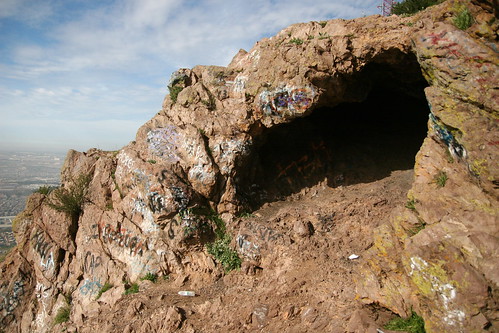
The rolling hills above Tijuana’s sprawling suburbs define the physical landscape of a city not often thought of for its geology. The highest peak, Cerro Colorado (Red Hill), stands about 500 meters (1,640 ft) above sea level. The western edge of the summit is marked in white with the phrase “Jesucristo es el Señor” (Jesus Christ is Lord). Local radio and television stations broadcast from antennas on top of hill. A dirt trail carved out by maintenance trucks runs up from the eastern edge of its base in the neighborhood El Florido. People use the trail to hike to the top. In addition to the panoramic view, there are a couple small caves along the sides of the peak.

Cerro Colorado Map

Here are a few photos and a video from a recent trip up Cerro Colorado:

Cerro Colorado: La Subida

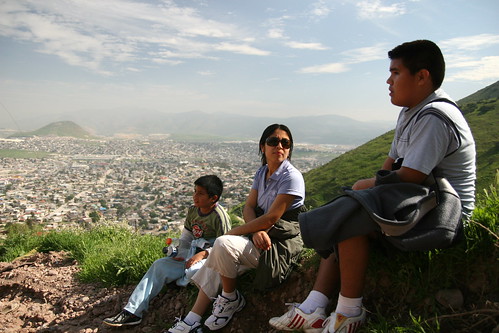
Cerro Colorado: Rest Stop

Tijuana Panorama Desde el Cerro Colorado

Walking Across the top of Cerro Colorado

Graffitied Cross

Cueva del Cerro Colorado

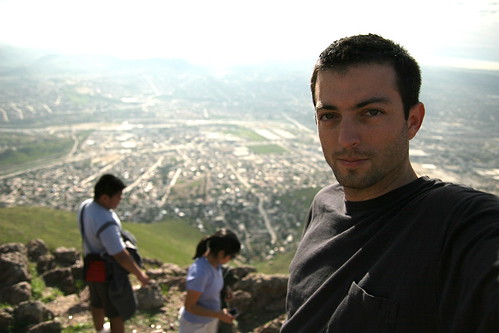
Nathan Above Tijuana

Cerro Colorado: North West View

Guide to Shooting Video or Taking Photos at the Polls

I’ve taken my camera with me to vote for the last several elections resulting in both good and bad experiences. When San Diego used touch-screen machines for the first time, I was able to get a shot using my digital SLR. On another election day, I was stopped and aggressively questioned by a poll worker for trying to take a cellphone photo.

Here’s the problem. The legality of cameras inside polling places isn’t black and white; the laws vary state by state. Plus, some poll workers have only received basic training and will apply their own judgement. The Citizen Media Law Project suggests four things to avoid getting yourself into trouble: follow the rules, be discreet, don’t interfere with voters or the process, respect the buffer zone.

In California, election codes aren’t particularly clear. They prohibit recording within 100 feet of anyone entering or exiting the polling place with the intent to dissuade others from voting. This is where the above guidelines come in; stay low-key and they’ll likely leave you alone. I spoke with the San Diego County Registrar of Voters and they said photography and video will be allowed up to 25 feet away.

While inside the polling area, California Elections Code says you must be in the process of voting (i.e. not using a camera), are limited to 10 minutes, and can’t show your vote to others (i.e. not documenting your vote). While it doesn’t specifically state “no cameras allowed,” legal precedent hasn’t cleared up the specifics. Government officials err on the side of caution. The California Secretary of State’s office says it has “historically taken the position that use of cameras or video equipment at polling places is prohibited, though there may be circumstances where election officials could permit such use.” When I spoke to the San Diego County Registrar of Voters, they said they won’t allow cameras inside the polling place except for credentialed journalists.

From a certain angle, this all seems very oppressive. This is a free country and I should have the right to video my vote, right? Yes, but other voters should also have the right not to be surveilled while voting. Poll workers are commissioned to protect the vote and can kick you out, even calling the police if you cause enough of a disturbance. This can all be avoided by sticking to the suggestions mentioned above. Pay attention and be careful not to record other people unwillingly.

Publish Your Photos and Videos on Election Day

  • YouTube and PBS have partnered with Video Your Vote to gather first-hand accounts on election day. They’ve arranged the videos on a map to note voter intimidation and other problems at the polls.
  • The New York Times’ Polling Place Photo Project collects images to create “an archive of photographs that captures the richness and complexity of voting in America.”
  • Video The Vote is a watchdog group organizing people to document voter suppression and other problems.

Shooting the Next President

(Attn. Homeland Security: In photography, “shooting” is a term we use for “photographing” someone. You know, as in “photo shoot.” So no need to worry. And by “worry”, I mean wiretap, surveil, or put me on a list. I’m not a terrorist.)

In July, I was fortunate enough to get the photo assignment to shoot presumptive presidential nominees John McCain and Barack Obama. They visited San Diego for the National Council of La Raza conference.

Barack Obama at the National Center of La Raza Conference

Obama Speaking

Obama delivered a speech punctuated by applause. But it was still a bit lukewarm compared to what I expected. I’d heard stories of his charismatic delivery and rockstar-like receptions. That was all there, I guess, but there was a lingering stress in the air. Obama needed to get defeated Hillary Clinton supporters excited about voting for him. He got loud cheers in reference to oppressive immigration raids, but applause was absent from his discussion of details: securing the border first, path to citizenship starts at the back of the line, fines for non-legal status, etc. When the speech was over, he shook hands with the students seated behind him and made his way slowly through the front edge of the crowd.

The press were given a sideline area at about half-court in the convention center’s large ballroom. My 70-200mm zoom lens only got me close enough for a decent medium-wide shot. I had to crop the shot above by 50 percent to get something usable. At this distance, my lens looked pretty weak compared to the pros bumping shoulders next to me — the ones you see at sports games with what look like space-age sniper rifles. I was disappointed that I wasn’t able to get closer and, more specifically, that we weren’t allowed to get any closer. The only concession was being taken two-by-two into the center aisle for about 60 seconds, once.

John McCain at the National Council of La Raza Conference

Introducing John McCain

McCain’s appearance had a dramatically different tone. For starters, his wife Cindy McCain accompanied him on stage. It felt warmer than Obama’s solo performance, somehow less formal and more classy at the same time. I couldn’t help thinking McCain scored a few extra “family values” points with the Latino crowd. He spoke not as if he were trying to impress, but as if he were having a conversation with friends. He took questions from the audience after his speech. And after conference organizers said the Q&A session was over, McCain threw the microphone into the crowd to take another question.

Before the speech began, there were rumors that we’d be escorted in small groups to the front lines. Apparently the McCain people caught wind of photographer’s complaints and agreed to allow us better access than during Obama’s speech. The conference staff members I spoke with said the campaign staff set the rules in terms of press access, not the conference itself.

Conclusions

McCain’s performance was definitely the most interesting of the two candidates, not only in terms of his interaction with the crowd but in his campaign’s interaction with the press. But I’m not sure how much of a difference it makes in the end. Of the photos I uploaded to Flickr, Obama’s mediocre shots have been viewed more than twice as much as McCain’s more dynamic photos. And of McCain’s, two-thirds of his views come from the photos of his wife Cindy.

We don’t learn anything terribly valuable from these numbers. Yeah, Obama has more buzz than McCain. And on average, Cindy McCain has more than either of them. Perhaps it’s really only an indicator of the superficial nature of the statistical mob. We can only hope the people vote based on their version of who will be the best president, not merely on who will be a best looking one.

Flash Lamp Photography: Behind the Scenes of an NPR Interview

I met Race Gentry standing with his antique camera and vintage flash lamp outside his mother’s home in La Jolla. I was there to record audio for an All Things Considered story and shoot video to accompany the interview on NPR’s website. Race is one of the few people around who uses the 100-year-old technique.

Screenshot of NPR media player

In typical tape sync fashion, Robert Siegel spoke to Race by phone. I stood next to Race, holding the mic six inches from his mouth — my recording of his voice would later be combined with the host’s voice by NPR editors, giving the conversation a higher quality, natural sound. Unfortunately, we had to stop the interview every few minutes because of the military flights going in and out of MCAS Miramar. We were also interrupted for trash collection. And again for recycling.

Race explained the process of pouring the powder in the tray, setting the percussion cap in place, pulling the trigger to ignite the cap, and the explosive flash that follows. The first flash lamp he demonstrated with wouldn’t fire. He was using toy paper caps, but the humidity or bad luck kept it from firing. He switched to another flash lamp that uses rare, original percussion caps. That definitely did the trick. The massive smoke cloud was pretty impressive.

Take a look at the final video, listen to the interview and hear the flash lamp sound. Race Gentry also has his own flash lamp videos on YouTube.

Two Hour Time-Lapse at Work

I just got a new camera gadget, the Canon Timer Remote Controller TC-80N3. This is the main tool that Ross Ching uses to make really amazing time-lapse videos. Check out Eclectic, Eclectic 2.0, a behind the scenes video, and some great press he’s been getting.

I had my camera at my desk after taking a photo at work and decided to test out the new timer. The video spans two hours in 20 seconds. I was listening to the Citizen Voices interview from the photo, working with Kelli Enger on producing web videos about the authors of Three Cups of Tea, talking with Angela Carone about future projects, and having birthday cake and ice cream for Gloria Penner’s birthday and mine.

icon for podpress  Podcast Video [0:20m]: Download